Key takeaways
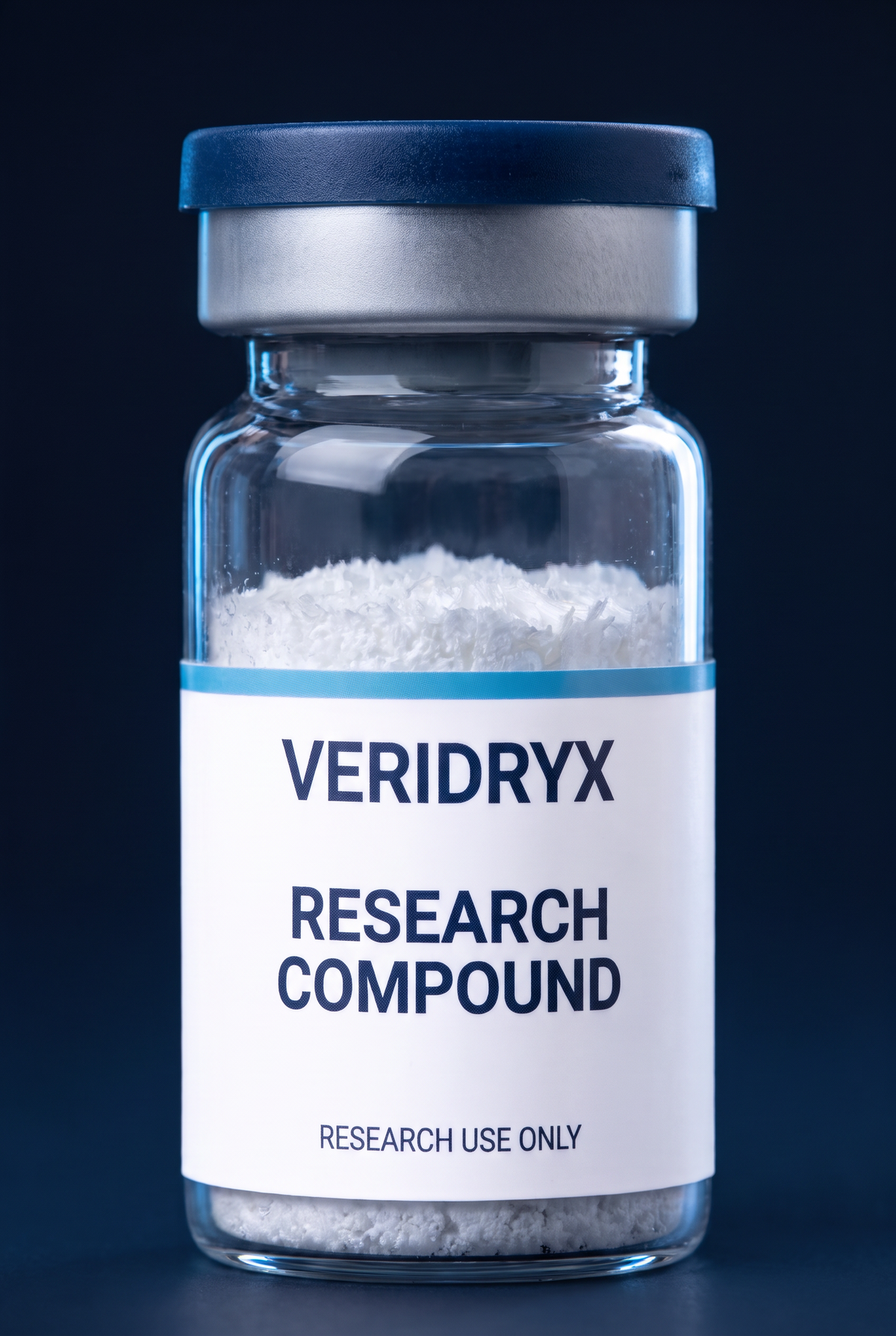
- A well-formed lyophilized cake is usually a uniform, matte, white to off-white solid that keeps the shape and volume of the frozen fill.
- Collapse and meltback are process defects: the product warmed past a critical temperature while ice or unfrozen water was still present.
- Mild shrinkage, hairline cracks and a cake that broke into powder during transit are common and are usually cosmetic.
- A cake that has turned sticky, glassy or liquid after receipt points to moisture ingress and is worth documenting.
- Appearance cannot confirm identity, purity, net peptide content or water content; those come from the lot's certificate of analysis.
Lyophilized cake appearance is the first piece of evidence a researcher sees when a vial arrives, and it is easy to over- or under-interpret. This guide explains how a freeze-dried cake forms, what the common visual defects mean, and where visual inspection stops being informative and analytical data has to take over.
How a lyophilized cake forms
Freeze-drying (lyophilization) removes water from a frozen solution in three stages. The appearance of the finished solid is a record of how each stage went.
- Freezing. The solution is cooled until most of the water crystallizes as ice. The solutes concentrate between the ice crystals into a freeze-concentrate, which is either amorphous (a glass) or partly crystalline, depending on the composition.
- Primary drying. Under vacuum, ice sublimes directly to vapor. The ice crystals leave behind pores, and the remaining solid matrix becomes the cake. The product must stay below its critical temperature during this stage.
- Secondary drying. The shelf temperature is raised to desorb water still bound to the solid matrix, lowering residual moisture to the target level.
Two temperatures matter most. For amorphous systems, the collapse temperature (Tc) sits close to the glass transition temperature of the maximally freeze-concentrated solute (Tg′). For crystalline systems, the relevant limit is the eutectic temperature (Te). Exceeding these limits while ice is present is what produces most of the defects described below.
What normal lyophilized cake appearance looks like
A conforming cake typically has these features:
- Uniform color, usually white to off-white, with no localized discoloration.
- A matte, porous texture rather than a shiny or glassy surface.
- Roughly the same height and diameter as the original liquid fill, sometimes with a slightly raised edge where the solution met the glass.
- No visible liquid, droplets or sticky residue.
Small fills look different
Many research peptides are lyophilized from a few milligrams of material with little or no bulking agent such as mannitol. With so little solid, the "cake" may be a thin film on the vial base, a small pellet, a loose fluffy deposit or a barely visible residue. This is expected and is not, by itself, a sign of underfilling. Fill mass is confirmed by the documented weight and the assay, not by how much material appears to be in the vial.
Common cake defects and what they mean
The table below summarizes the defects most often discussed in freeze-drying literature, their usual causes and how much they matter for laboratory work.
| Observation | Usual cause | Typical significance |
|---|---|---|
| Collapse (loss of pore structure, partial or full shrinking into a dense mass) | Product temperature exceeded Tc during primary drying | Often higher residual moisture and slower dissolution; worth noting on receipt |
| Meltback (glassy, bubbled or liquid-looking zone, often at the base) | Ice melted instead of subliming, for example above Te or when heat was added too early | A process deviation; residual water may be high in that zone |
| Uniform shrinkage (cake pulled away from the vial wall) | Normal densification during secondary drying | Usually cosmetic |
| Cracking or fissures | Mechanical stress in the matrix during freezing or drying | Usually cosmetic |
| Cake broken into loose powder | Vibration and handling during shipping | Cosmetic; material is still in the vial |
| Powder on the stopper or vial neck | Fine particles carried up during drying, splashing at fill, or movement in transit | Usually cosmetic; open carefully to avoid losing material |
| Sticky, gel-like or liquefied material after receipt | Moisture uptake through a compromised closure, or condensation from opening a cold vial | Document and investigate; contact the supplier with the lot number |
Collapse versus meltback
The two are often confused. Collapse happens when the amorphous matrix becomes soft enough to flow and lose its pore structure, even though the ice is still subliming. Meltback is a liquid-phase event: ice actually melted, so the affected area dried from a liquid and typically looks glassy, bubbled or puddled. Both suggest the vial experienced conditions outside the intended process window.
Puffing and blow-out
Occasionally the cake rises above the fill line or fragments are ejected toward the stopper. This can happen when the dried layer above the sublimation front cannot vent vapor fast enough. Material on the stopper underside should be considered part of the vial contents.
What appearance cannot tell you
Visual inspection is a screening step, not a quality test. A perfect-looking cake can contain the wrong sequence, low purity or high water content, and a cracked or collapsed cake can meet every specification. Appearance does not reveal:
- Identity, which is confirmed by mass spectrometry. See our guide to mass spectrometry identity confirmation.
- Purity, which is measured as HPLC area percent.
- Water content, which is measured by Karl Fischer water content testing; collapse can correlate with higher moisture, but only a measurement gives a number.
- Net peptide content, which reflects water and counter-ions as well as the peptide itself.
- Chemical degradation such as oxidation or deamidation, which is generally invisible.
Color deserves a specific note. A faint off-white or cream tint is common and depends on the sequence and counter-ion. A clear change in color between vials of the same lot, or after storage, is worth recording because it can accompany chemical change, but it still needs analytical follow-up to mean anything.
A practical inspection routine on receipt
- Let the sealed vial equilibrate to room temperature before opening, so atmospheric moisture does not condense on a cold, hygroscopic solid.
- Inspect against a white and then a black background under good light.
- Record lot number, date, observed appearance and any defects using plain descriptive terms ("cake detached from wall, two hairline cracks").
- Check the closure: seal intact, stopper seated, no visible gap.
- Compare the lot number on the vial with the packing slip and the certificate of analysis.
- Photograph anything unusual before opening, then store the vial as described in our note on storage and stability of lyophilized peptides.
When a vial shows liquefaction, a broken seal or a defect that differs from the rest of the lot, keep it sealed, record the observation and reference the lot-level data published in the Veridryx Testing Library when raising it with the supplier.
Frequently asked questions
Is a cake that pulled away from the vial wall defective?
Usually not. Uniform shrinkage away from the wall is a common result of densification during secondary drying and is generally regarded as cosmetic.
My vial looks almost empty. Is something missing?
Small fill masses without a bulking agent often dry to a thin film or small pellet. Fill amount is confirmed by documented weight and assay, not by visual volume.
Does a collapsed cake mean the material is degraded?
Not necessarily. Collapse indicates a process excursion and may mean higher residual water, but degradation can only be assessed with analytical methods such as HPLC and MS.
Why did my powder become sticky after I opened the vial?
Lyophilized peptides are often hygroscopic. Opening a cold vial or leaving it uncapped in humid air lets the solid absorb water, which can turn it tacky within minutes.
References
- Jennings TA. Lyophilization: Introduction and Basic Principles. Interpharm Press.
- Rey L, May JC, eds. Freeze-Drying/Lyophilization of Pharmaceutical and Biological Products. CRC Press / Informa Healthcare.
- ICH Q1A(R2). Stability Testing of New Drug Substances and Products.
- USP <921> Water Determination.
Disclaimer. This article is for research and educational purposes only. It describes laboratory and analytical practice and is not medical advice. It contains no dosing, administration or human-use guidance. Veridryx products are sold for laboratory research use only and are not for human or veterinary use.