Key takeaways
- “Research use only” (RUO) is an intended-use designation: the material is supplied for laboratory research and is not intended for use in humans or animals.
- RUO describes intended use, not a quality grade; quality is documented on the specification and the lot COA.
- RUO materials differ from GMP-grade materials, which are made under drug manufacturing quality systems and are supported by regulatory filings.
- Buyers are responsible for using RUO materials only in appropriate laboratory settings, with institutional oversight and safe handling.
- Suppliers ask for attestations to document that a buyer understands and accepts the intended use.
The research use only label is a straightforward intended-use statement: a material labeled RUO is supplied for laboratory research and is not intended for use in humans or animals, or as a drug, food or household product. This article explains what the label signals, how RUO materials differ from GMP-grade materials, what responsibilities fall to the buyer, and why suppliers ask for attestations. It describes general principles only and is not legal advice.
The meaning of research use only: an intended-use statement
A product’s intended use is the purpose its supplier designs, labels and sells it for. An RUO label states that purpose plainly: laboratory research, such as analytical method development, in vitro experiments, chemistry and assay development.
In general, regulators look at more than the words on a label. How a product is described, promoted and sold, and to whom, also shapes how its intended use is understood. A label that says RUO alongside marketing that suggests other uses sends a contradictory message. Consistent labeling, documentation and sales practices are what make an RUO designation credible.
What an RUO label typically includes
- A clear statement such as “For research use only. Not for use in humans or animals.”
- Product identity, lot number and quantity.
- Storage conditions and any retest or expiry date.
- Hazard information where required, consistent with the safety data sheet.
RUO vs GMP-grade and other material grades
RUO is often misread as a quality grade. It is better thought of as a statement about the regulatory context. The table compares it with other common designations.
| Designation | What it signals | Typical quality framework | Intended setting |
|---|---|---|---|
| Research use only (RUO) | Intended for laboratory research; not for use in humans or animals | Supplier’s own specifications and quality system; lot-level testing | Research and development laboratories |
| Reagent or analytical grade | Meets defined purity specifications for laboratory chemicals | Compendia such as ACS Reagent Chemicals, or supplier specifications | General laboratory and analytical use |
| Compendial grade (e.g., USP/NF) | Meets a pharmacopeial monograph | Pharmacopeial monograph and general chapters | Regulated pharmaceutical manufacturing and testing |
| GMP-grade API | Manufactured under drug manufacturing controls | ICH Q7 and applicable national GMP regulations, with regulatory filings | Manufacture of regulated drug products |
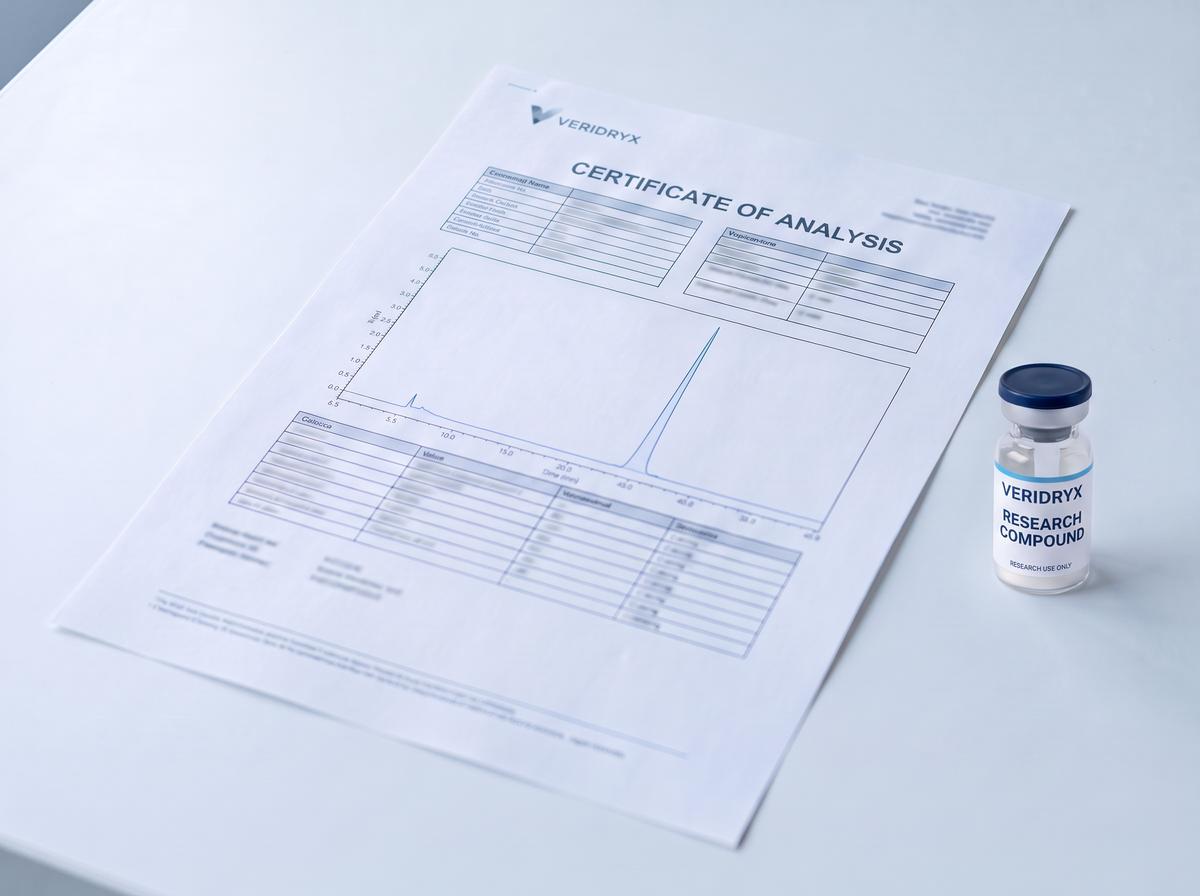
An RUO material can be highly characterized, with purity, identity, content and contaminant data on every lot. Equally, an RUO label says nothing about quality by itself. The way to judge a material is to read its specification and certificate of analysis, as covered in our guide on how to read a certificate of analysis.
What RUO materials do not have
- A regulatory marketing approval or drug master file supporting use in regulated products.
- Manufacture under drug GMP regulations, unless separately stated and supported.
- Any claim of suitability for use in humans or animals.
Who buys RUO materials
RUO materials are intended for qualified purchasers working in research settings, such as:
- academic and government research laboratories;
- contract research and analytical testing laboratories;
- industrial research and development groups;
- laboratories developing or qualifying analytical methods.
Suppliers set their own sales policies. Many sell only to qualified institutions, companies and researchers who confirm they are buying for laboratory research, and may decline orders that do not fit that purpose. Veridryx’s terms are set out in its research use policy.
Buyer responsibilities
Once an RUO material is received, responsibility for its use rests with the purchasing organization and its researchers. In practice this usually means:
- Appropriate use. Using the material only for laboratory research consistent with its labeling.
- Institutional oversight. Following your institution’s approvals, safety committees and procurement rules.
- Safe handling. Reviewing the safety data sheet, using appropriate controls and training staff, consistent with the OSHA Hazard Communication Standard and, where applicable, the OSHA Laboratory Standard.
- Storage and security. Storing materials as labeled and controlling access to them.
- Records. Recording lot numbers, receipt and use, so materials stay traceable.
- No relabeling or resale for other purposes. Removing or altering RUO labeling, or supplying the material to others for uses outside research, is inconsistent with its intended use.
- Disposal. Following institutional environmental health and safety procedures for chemical waste.
If you are unsure whether a planned use fits within research use, consult your institution’s compliance, legal or regulatory affairs office. Suppliers cannot provide advice on how a research material should be used beyond its labeling.
Why suppliers ask for attestations
An attestation is a short statement, often a checkbox or signed form at the point of order, in which the buyer confirms that the material is for laboratory research and will not be used in humans or animals. Suppliers ask for it for several reasons:
- It documents that the buyer has seen and accepted the intended use.
- It supports consistency between labeling, documentation and sales practice.
- It gives the supplier a clear basis for declining orders that indicate a different purpose.
- It forms part of the record if questions are raised later.
An attestation does not transfer the supplier’s own responsibilities. Suppliers still need accurate labeling, accurate documentation and marketing that stays within research use. Buyers, in turn, should regard the attestation as a real commitment rather than a formality.
How documentation supports RUO
A credible RUO supplier backs the label with documentation a researcher can use: a specification, a lot-level certificate of analysis, a safety data sheet and clear lot traceability. Our sibling articles on lot traceability and research peptide supplier qualification describe what to look for. Veridryx publishes lot-level COAs in its Testing Library.
Frequently asked questions
Does RUO mean lower quality?
No. RUO describes intended use, not purity or quality. A material’s quality is shown by its specification and lot-level test results.
Can an RUO material be used to make a regulated product?
RUO materials are not supplied for that purpose and lack the manufacturing controls and regulatory support such use generally requires. Questions about regulated manufacturing should go to your regulatory affairs or quality function.
Why does a supplier ask me to confirm my intended use?
The confirmation documents that you understand the material is for laboratory research only. It is a standard part of selling RUO materials responsibly.
Is this article legal advice?
No. It describes general principles of RUO labeling. Requirements vary by jurisdiction and product type, so consult qualified advisers for specific questions.
Disclaimer. This article is for research and educational purposes only. It describes laboratory and analytical practice and is not medical advice. It contains no dosing, administration or human-use guidance. Veridryx products are sold for laboratory research use only and are not for human or veterinary use.
References
- OSHA Hazard Communication Standard, 29 CFR 1910.1200.
- OSHA Occupational Exposure to Hazardous Chemicals in Laboratories, 29 CFR 1910.1450.
- ICH Q7 Good Manufacturing Practice Guide for Active Pharmaceutical Ingredients.
- United Nations, Globally Harmonized System of Classification and Labelling of Chemicals (GHS).